A Night in a Passive House: What Our Guests Say
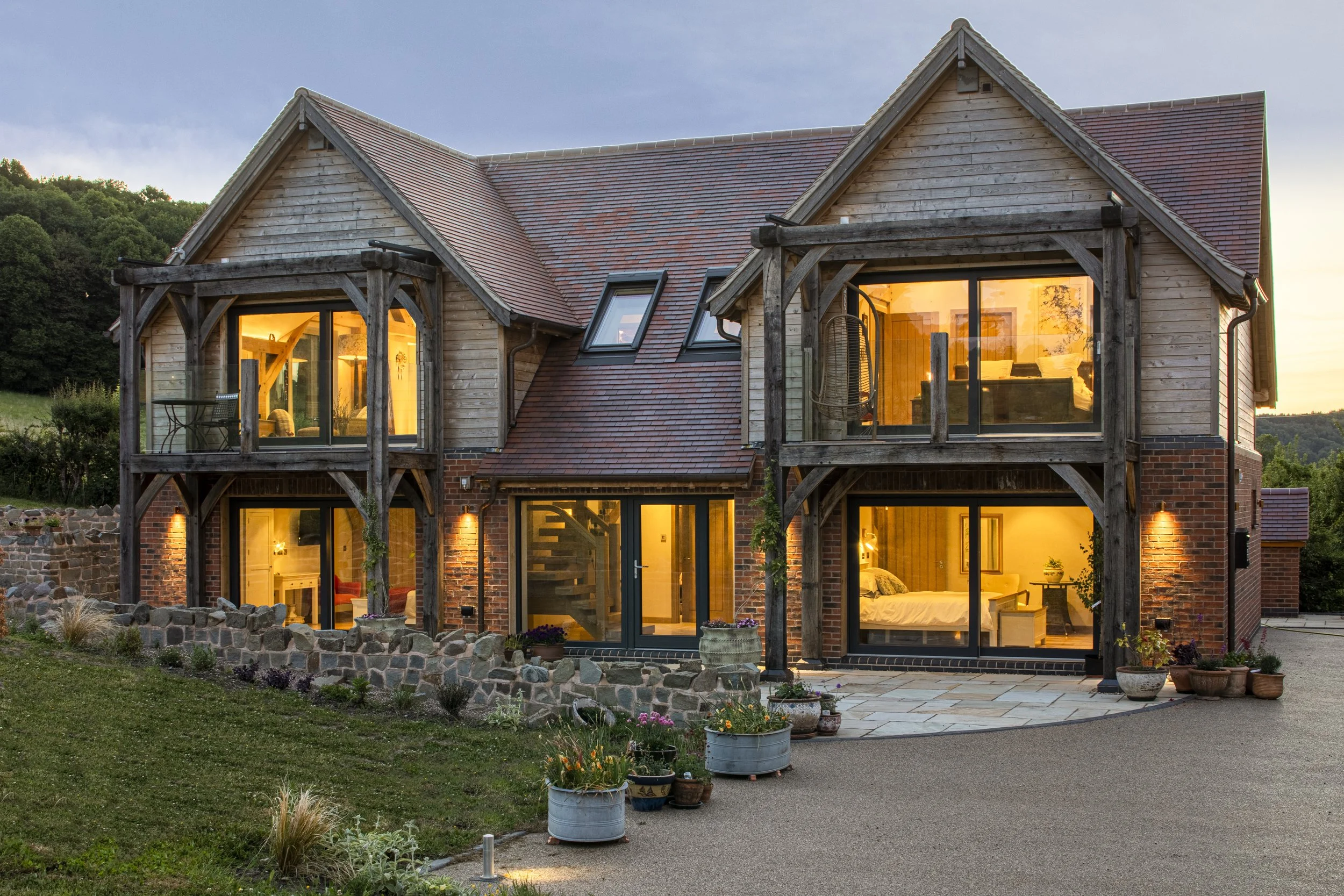
Experience the Passivhaus difference at Woodlands Malvern B&B
The quotes here from some of our B&B guests can be found in full on Google Maps.
What makes a passive house so different is its indoor environment: it’s tranquil, calm and restful; bright and airy yet cosy; fresh but draught-free; and it has an even, comfortable temperature everywhere in the house throughout the year.
A Passivhaus building’s high levels of insulation and airtightness, and its constant, imperceptible supply of filtered fresh air and extraction of stale air throughout creates comfort at a wholly different level.
And at Woodlands, our full-length windows both flood the house with daylight and enable incredible views in a secluded valley in the Malvern Hills Natural Landscape.
“Our stay at Andrew and Linda’s Passivhaus was a wonderful experience and the hospitality second to none! It was a cocoon of warmth and tranquility....The science behind the Passivhaus was a fascinating revelation. ”
“Woodlands is a whole new level of B&B ...it’s guaranteed to relax you ...In summary, we highly recommend booking a visit either for the house, location and hosts or because it’s a passive house and you want to feel what it’s like to stay in one”
“Amazing place to relax and enjoy the true value of staying in a Passive House. We had the best hosts ever, truly recommend for a calm quiet break”
The ultra-low energy Passivhaus standard substantially exceeds even the latest building regulations for England such that heating costs are some 75% lower than modern houses (and 90% lower than older homes).
This all leads to the ‘relaxed’ and ‘cocoon of warmth and tranquility’ that our B&B guests have referred to.
A key Passivhaus feature that guests and visitors notice is that on coming in on cold days you are met by a gentle warmth that seems to radiate from everywhere even though the heating is only rarely on. And on hot summer days there’s an equivalent coolness that seems to come from everywhere.
Another characteristic is the constancy of the indoor temperature throughout the house whatever is happening outside, as shown in the temperature record below - this for 2024, but similar to each of the years we’ve lived here.
“Over the weekend the outside temperatures reached around 30C on Friday and Saturday but inside the Passivhaus was a cool and fresh environment.”
We use data loggers that measure the indoor and outdoor temperatures at Woodlands every 30 minutes. The results for 2024 are shown below and are remarkably similar to each of the preceding five years. The key point is that whatever is happening outside, the indoor temperature of a passive house remains incredibly constant. This was also the case in 2022 when we experienced a heatwave in July (with the hottest temperatures then ever recorded in England) and a cold snap in December, as shown in the graphs further below.

Indoor and outdoor temperatures at Woodlands (ºC): 1 January - 31 December 2024. This shows average temperatures and the hottest and coldest outdoor extremes and corresponding indoor temperatures
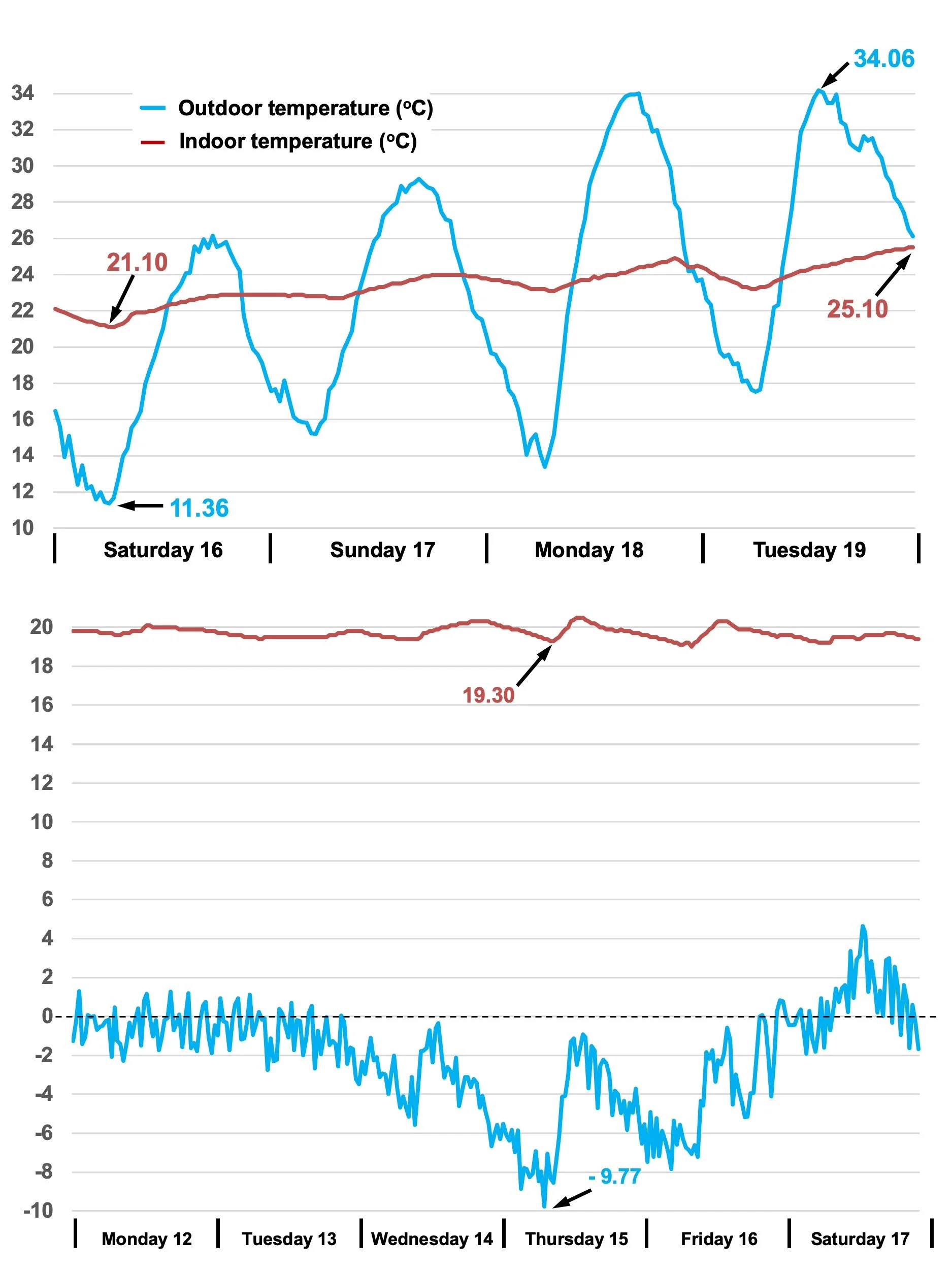
Indoor and outdoor temperatures (ºC) during the July 2022 heatwave (above) and December 2022 cold snap (below) at Woodlands Malvern B&B
The top graph, left, shows that even during the hottest period in England so far, in June 2022 (above) and a significant cold snap in December in the same year (below), the indoor temperature at Woodlands Malvern B&B remained remarkably comfortable.
Significantly, in both our own bedroom and the guest rooms, we use the same lightweight silk duvets on the beds throughout the year. In our experience, and as our B&B guests tell us, this is all that’s needed whatever the outdoor temperature. (And our heating system only rarely comes on - for example, we estimate that active heating of the house in 2024 cost just £86; this is all attributable to the Passivhaus approach to building design.
Put another way, unlike our experience in other houses, we have never experienced a night where the outdoor temperature - very hot or very cold - made sleeping difficult, or which needed extra heating or cooling. Indeed, one of the problems of Passivhaus living is that you can’t judge what clothes you’ll need outdoors just by looking outside because it’s always so comfortable inside!
“Having visited a number of Passive Houses during open days, it was good to finally spend a couple of nights in one and experience the comfort and atmosphere first-hand. Our visit just confirmed that this is the way to build.”
Experience the Passivhaus difference for yourself and book a stay at Woodland Malvern B&B!